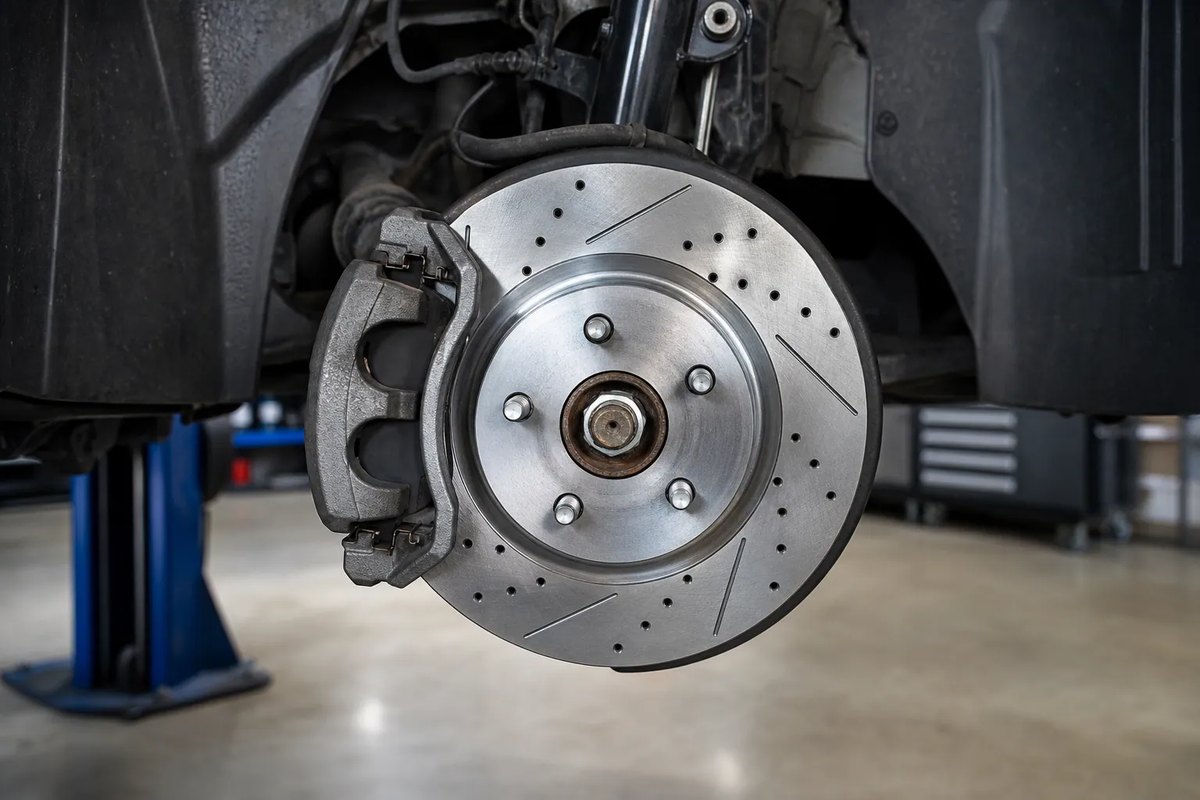
Brake pads are wear items, which means replacing them is a normal part of owning a car rather than a sign something has gone wrong. The good news is that pads rarely fail without warning. If you know what to listen and feel for, you can replace them on your schedule instead of in an emergency.
Listen for a High-Pitched Squeal
Many pads have a small metal tab called a wear indicator built in. When the pad material wears thin, that tab starts to contact the rotor and produces a high, persistent squeal when you are moving, often easing when you press the brake. That sound is engineered to be annoying for a reason: it is telling you the pads are near the end of their life.
Watch for Grinding
A harsh grinding or metallic scraping is more serious than a squeal. It usually means the pad material is gone and metal is contacting the rotor directly. At that point you are likely damaging the rotors with every stop, which turns a routine pad replacement into a more expensive repair. Grinding means stop driving and get it looked at promptly.
Notice Longer Stopping Distances
If the car takes noticeably longer to stop, or the pedal feels like it needs more pressure than it used to, the pads may be worn or glazed. This change is gradual, so compare against how the car felt when it was newer rather than day to day.
Feel for Vibration
A pulsing through the brake pedal often points to uneven rotor wear, which frequently goes hand in hand with worn or unevenly worn pads. It is worth having both inspected together.
Check the Pad Thickness
On many cars you can see the outer pad through the wheel spokes. As a rough guide, pad material thinner than about a quarter inch is getting low and worth scheduling a replacement. A dashboard brake warning light, where equipped, is another prompt to inspect.
Brakes are not the place to wait and see. If you notice any of these signs, have the pads measured. Replacing pads early is inexpensive; ignoring them risks the rotors, calipers, and your safety.