Keeping a car reliable comes down to doing small things on time rather than waiting for something to break. Your owner's manual has the exact intervals for your vehicle, and you should follow it when the two differ, but the general rhythm below applies to most modern cars and makes the habit easy to remember.
Every Few Thousand Miles
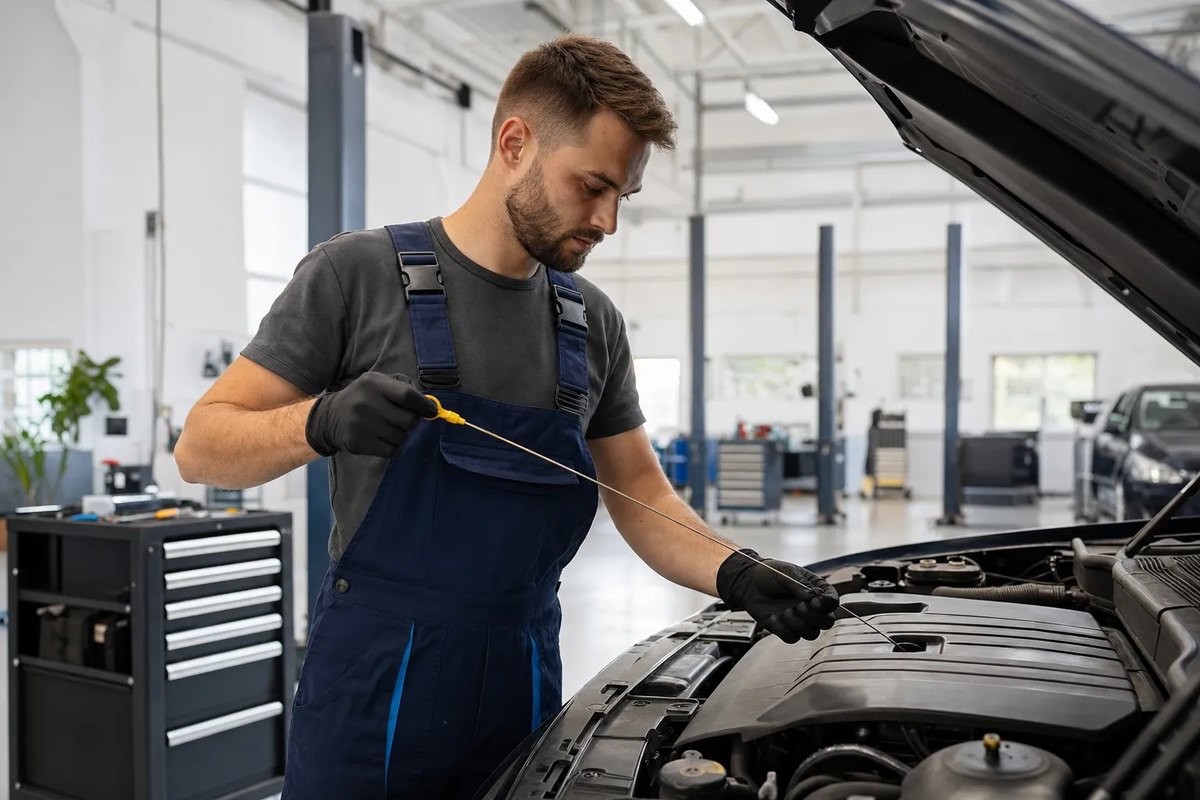
This is the rhythm of routine care. Check tire pressure and look the tires over for uneven wear. Top off washer fluid, and glance at the engine oil level with the dipstick. Modern cars go longer between oil changes than older ones did, but checking the level between services catches a slow leak before it becomes a problem.
- Check and adjust tire pressure
- Inspect tires for uneven or excessive wear
- Check engine oil level
- Top off windshield washer fluid
Around Every Oil-Change Interval
Follow the oil and filter interval your manufacturer recommends, whether that is based on mileage or the car's own monitor. While the car is in for an oil change is a natural time to rotate the tires, which evens out wear and extends their life, and to have the brakes and fluids glanced over.
Every 15,000 to 30,000 Miles
At this range the engine air filter and cabin air filter usually need attention; a clogged engine filter hurts efficiency and a dirty cabin filter weakens airflow from the vents. Have the brake pads measured and the battery tested, especially before extreme weather.
Every 30,000 to 60,000 Miles
This is the window for bigger fluid services. Brake fluid, coolant, and transmission fluid all have service lives, and replacing them on schedule prevents corrosion and wear inside expensive components. Spark plugs on many cars also fall in this range or a bit beyond.
Major Service Milestones
Around 60,000 miles and again near 90,000 to 100,000, cars often reach larger scheduled services that may include the timing belt on engines that use one, plus a thorough inspection of belts, hoses, and suspension parts. A neglected timing belt can cause serious engine damage, so this is not an interval to skip.
The exact numbers vary by vehicle, but the principle does not: small, regular attention is far cheaper than a breakdown. Keep a simple log of what you do and when, and the car will tell you less often that something is wrong.