Before a long road trip, check seven things: tire pressure, condition and the spare; engine oil, coolant, brake fluid and washer fluid; brakes; all exterior lights and wipers; the battery and belts; dashboard warning lights; and your emergency kit. None of these checks requires special tools, and most take only minutes. Do them a few days before you leave so there is time to fix anything that looks marginal.
A long drive puts more strain on a car than a week of short errands, and it usually happens far from your trusted shop. A short pre-trip inspection greatly reduces the chance of a roadside breakdown and gives you peace of mind.
Road Trip Car Checklist at a Glance
- Tires: set pressure to the placard value when cold, inspect tread and sidewalls, check the spare, jack and lug wrench.
- Fluids: engine oil, coolant, brake fluid, washer fluid.
- Brakes: no noise, firm pedal.
- Lights and wipers: headlights, brake lights, turn signals, hazards, wiper blades.
- Battery and belts: test an older battery, look for cracked or frayed belts.
- Emergency kit: jump pack or cables, flashlight, first aid kit, water, reflective triangle, phone charger.
- Warning lights: nothing lit on the dash, especially a check engine light.
Tires and Spare
Tires are the single most important thing to check before a trip. Set them to the recommended pressure when cold, including the spare, and look closely at the tread and sidewalls for uneven wear, cracks, or bulges. Underinflated or worn tires are a leading cause of highway trouble. Make sure your jack and lug wrench are present and that you know how to use them.
Where to Find the Right Tire Pressure
The correct pressure is on a sticker on the driver's side door jamb (some cars also list it in the glove box) and in the owner's manual. Do not use the maximum pressure molded into the tire sidewall; according to FuelEconomy.gov, that number is not the recommended pressure for your car. Check pressure before you drive, while the tires are cold.
Correct pressure also saves fuel on a long drive. FuelEconomy.gov, the U.S. Department of Energy and EPA site, says each 1 psi drop in the average pressure of all tires lowers gas mileage by about 0.2%. Uneven wear or a car that pulls to one side can point to an alignment problem, which the Car Care Council recommends having checked annually; a shaking wheel is covered in steering wheel shaking: causes, diagnosis, and fixes.
Fluids
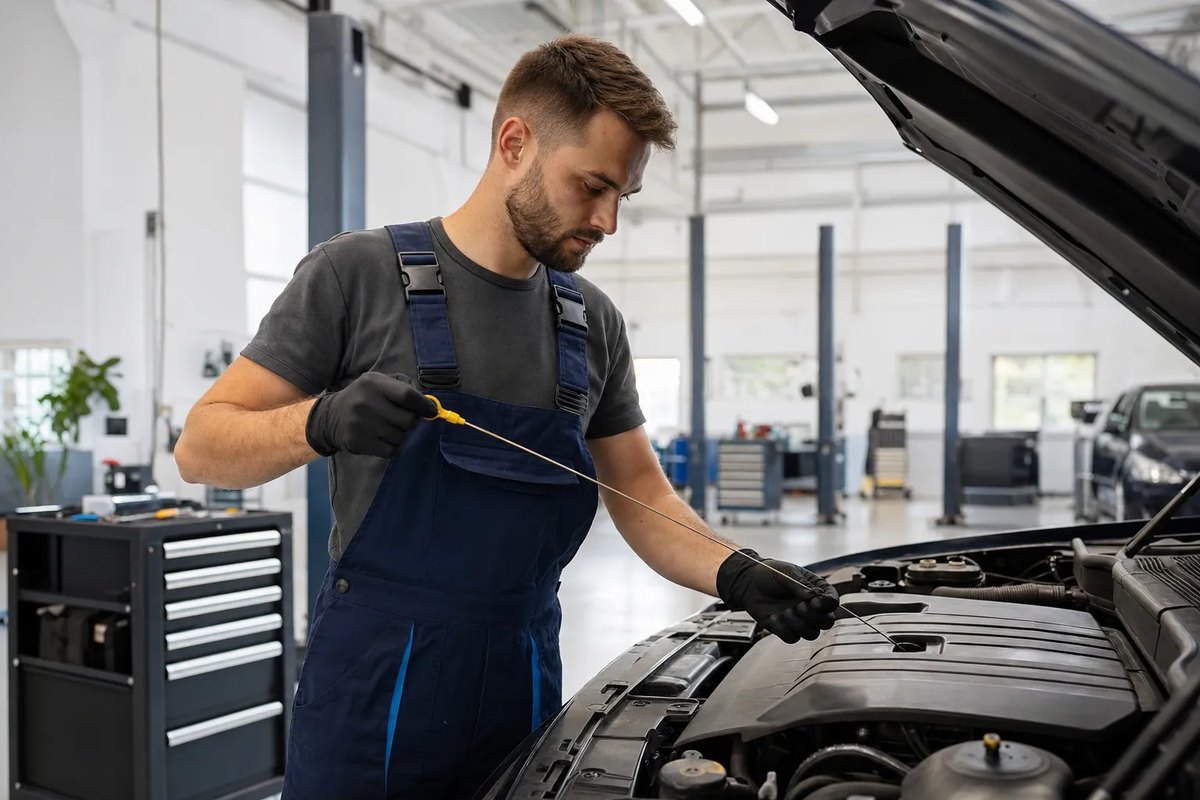
Check engine oil, coolant, brake fluid, and windshield washer fluid, and top off anything that is low. If you are near an oil change interval, do it before you leave rather than on the road; the car maintenance schedule by mileage shows what normally falls due and when. Low coolant in particular can turn a hot day on the highway into an overheated engine, so know what to do if the temperature gauge climbs (see engine overheating: causes, symptoms, and what to do).
Look at the ground where the car was parked overnight. A fresh spot under the engine is worth tracing before a long trip; a coolant leak or an oil leak only gets worse at highway speed and temperature.
Brakes
Listen for any noise and pay attention to how the pedal feels. If there is squealing, grinding, or a soft pedal, have the brakes inspected before you go (see squealing brakes: warning signs and causes). Mountain grades and heavy traffic ask a lot more of your brakes than daily driving does. The Car Care Council recommends a brake inspection once a year even when there are no symptoms.
Lights and Wipers
Walk around the car and confirm that headlights, brake lights, turn signals, and hazards all work; a second person makes this quick. Replace worn wiper blades and make sure the washer reservoir is full, since visibility in a sudden storm can matter a great deal. The Car Care Council suggests replacing wiper blades about every six months.
Battery and Belts
If your battery is more than a few years old, have it tested, especially before summer or winter travel. The Car Care Council suggests considering replacement once a battery is three years old or older. Slow cranking or dim lights are common early signs; car battery warning signs and when to replace explains how to test it. A quick look at the accessory belts for cracks or fraying can catch a failure waiting to happen.
Dashboard Warning Lights
Start the car and confirm that no warning lights stay on. A steady check engine light should be diagnosed before a long trip (see check engine light on: causes, codes, and what to do). The Car Care Council notes that a flashing check engine light indicates a problem that is happening now and needs immediate attention, so do not start a long drive with one flashing. A loose gas cap can trigger a steady light, so make sure it is tight.
An Emergency Kit
Carry a basic kit: jumper cables or a jump pack, a flashlight, a first aid kit, some water, and a reflective warning triangle. Ready.gov also lists a car phone charger, a blanket, and a map among the items to keep in a vehicle in case you are stranded. Save a number for roadside assistance in your phone.
Frequently Asked Questions
How far in advance should I get my car checked before a road trip?
Aim for several days to a week, so there is time to order parts or book a repair if something turns up. Running through the checklist again the day before you leave catches anything that changed, such as a tire that lost air.
Should I get an oil change before a long road trip?
If you are near your service interval, yes. Highway driving is steady work for the engine, and starting with fresh oil and a correct oil level removes one variable. Follow the interval in your owner's manual.
What tire pressure should I use for a road trip?
Use the pressure on the sticker in the driver's side door jamb or in your owner's manual, not the maximum printed on the tire sidewall. The owner's manual may list a different pressure for a fully loaded car.
Do I need a mechanic, or can I do the pre-trip check myself?
Tires, fluid levels, lights, wipers and the emergency kit are easy to do yourself. Brakes that squeal or feel soft, a weak battery, a leak, or a warning light are worth a professional look; see how to choose a trustworthy auto repair shop.
An hour of preparation is a small price for a smooth trip. Run through this list the day before you leave, fix anything that looks marginal, and you can focus on the drive instead of worrying about the car.